Print tip: choose Letter, scale 100% / Default, and turn on Background graphics so the gray shading copies cleanly.
ikigai.study · Printable
花札の十二ヶ月と和風月名The 12 Months of Hanafuda & Traditional Lunar Calendar — Page 1 (Front)
一月(睦月)〜十二月(師走)— Seasonal flowers, poetic pairings, traditional lunar month etymologies & cultural lore
ikigai.study/resources/hanafuda-reference
How the 12-Month Floral Calendar Works (花合わせの十二ヶ月と和風月名)
48 Cards = 12 Months × 4 Cards per Suit · Watch irregular month readings on 4, 7, 9!
A traditional Hanafuda deck (花札, “flower cards”) has no printed numbers: each suit represents one of the 12 months (一月〜十二月) through its seasonal flower and classical Traditional Lunar Month Name (和風月名: 睦月 → 師走).
1一月· 睦月
Mutsuki
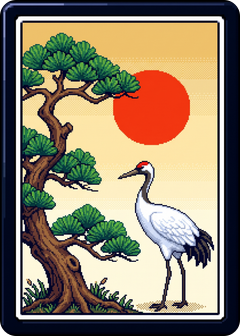
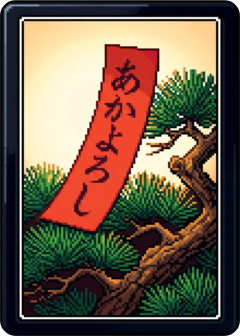
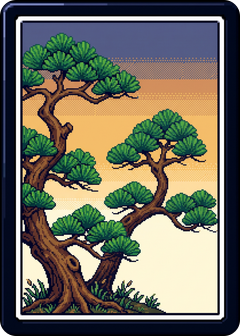
🌸 松(Pine)
× 鶴と日の出・赤短
Lunar origin:The “Month of Harmony / Affection” (睦び月), when families gather closely (睦み合う) to celebrate the New Year.
Evergreen pine (松) stands at house gates as 門松 to welcome the New Year deity, paired with the crane (鶴), emblem of 1,000 years of life.
2二月· 如月
Kisaragi
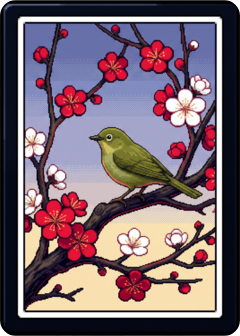
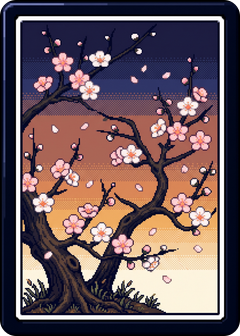
🌸 梅(Plum Blossom)
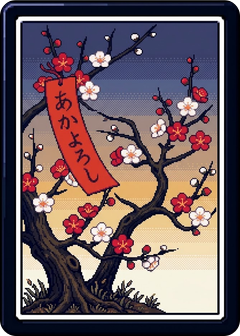
× 鶯・赤短
Lunar origin:From 衣更着 (“putting on another layer of kimono”), because lingering late-winter chill makes you layer extra robes even as spring begins.
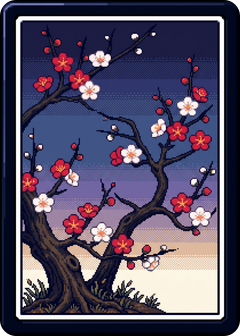
Plum blossoms (梅) brave the snow before cherry trees wake. The pairing of 梅に鶯 is a Japanese proverb for two things that harmonize beautifully.
3三月· 弥生
Yayoi
🌸 桜(Cherry Blossom)
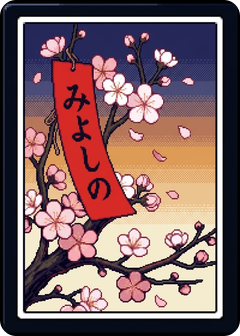
× 花見幕・赤短「みよしの」
Lunar origin:From 弥生い (弥 = more and more + 生い = sprouting/growing), the month when grass and trees burst into lush spring life.
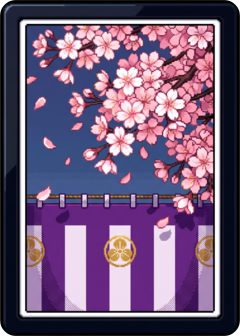
Striped camp curtains (幕) enclosed aristocratic blossom-viewing banquets (花見). Its ribbon praises Mount Yoshino (美吉野), Japan’s most famous sakura mountain.
4四月· 卯月
Uzuki
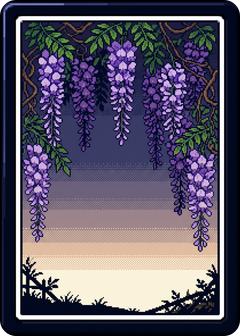
🌸 藤(Wisteria)
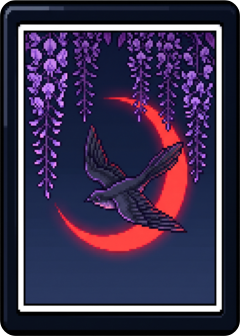
× 不如帰
Lunar origin:Named the “Month of the U-no-hana Flower” (卯の花月), when white deutzia blossoms cover the hedgerows in early spring.
Hanging purple wisteria vines (藤) bow humbly as they bloom, paired with the lesser cuckoo (不如帰), whose night song heralded early summer in classical waka poetry.
5五月· 皐月
Satsuki
🌸 菖蒲(Iris)
× 八ツ橋
Lunar origin:From 早苗月 (“Month of Young Rice Seedlings”), when farmers transplant young rice shoots (早苗) into flooded paddies.
Inspired by Ariwara no Narihira’s acrostic poem (かきつばた) at Yatsuhashi (八ツ橋, “Eight Bridges”) in Mikawa Province from The Tales of Ise (伊勢物語).
6六月· 水無月
Minazuki
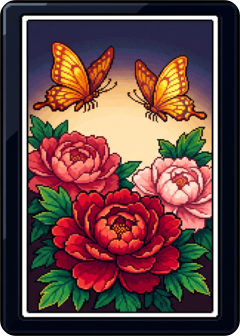
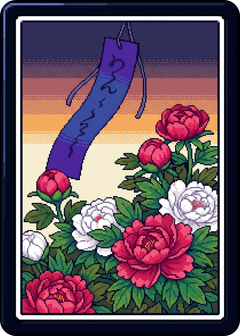
🌸 牡丹(Tree Peony)
× 蝶・青短
Lunar origin:Here 無 is the classical possessive particle の (= “of”), so 水無月 means “Month OF Water” (水の月), when water is drawn into every rice field!
Revered as the “King of Flowers” (百花王) for its opulent petals. Pairing Peony & Butterflies with July’s Boar and October’s Deer completes 猪鹿蝶!
7七月· 文月
Fumizuki
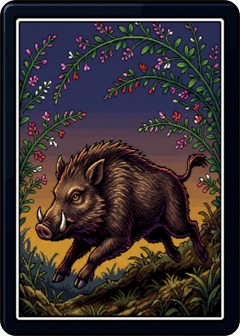
🌸 萩(Bush Clover)
× 猪
Lunar origin:Either the “Month of Writing Poems” (文披月) for Tanabata (七夕 bamboo wish strips) or “Month of Swelling Rice Ears” (穂含月).
Bush clover (萩) is first among the Seven Flowers of Autumn (秋の七草), paired with the fearless wild boar (猪) charging beneath its arching stems.
8八月· 葉月
Hazuki
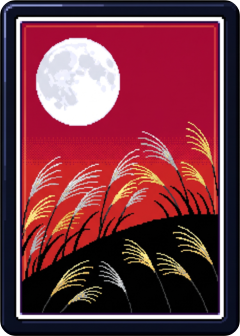
🌸 芒(Susuki Pampas Grass)
× 芒に月 (20点 光)・芒に雁 (10点 種)
Lunar origin:From 葉落月 (“Month of Falling Leaves”) or 穂張月 (“Month of Ripening Rice Ears”) in the traditional lunisolar autumn.
Showcases both the Full Harvest Moon (芒に月, 20点 光) for 十五夜 (お月見) and the Three Flying Geese (芒に雁, 10点 種) migrating across the autumn dusk over silver pampas grass.
9九月· 長月
Nagatsuki
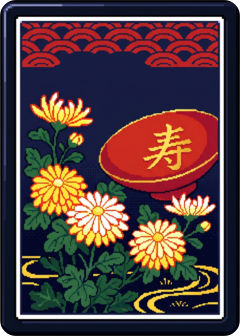
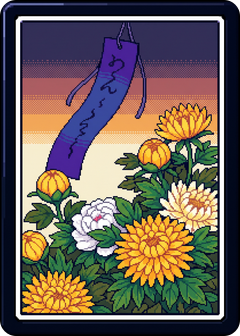
🌸 菊(Chrysanthemum)
× 寿の盃・青短
Lunar origin:From 夜長月 (“Month of Long Autumn Nights”), when crisp evenings grow longer after the autumn equinox.
On the Double Ninth Chrysanthemum Festival (重陽の節句, 9月9日), floating chrysanthemum petals in a sake cup (菊酒) was believed to grant longevity.
10十月· 神無月
Kannazuki
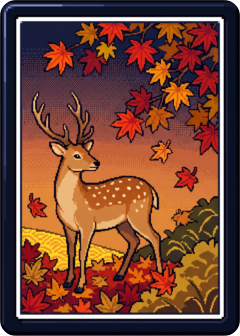
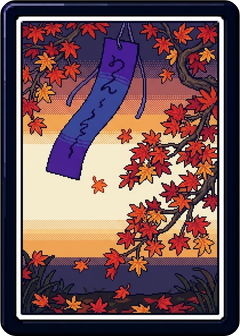
🌸 紅葉(Japanese Maple)
× 鹿・青短
Lunar origin:“Month Without Gods” across Japan because all eight million Shinto deities (八百万の神) travel to Izumo Grand Shrine (出雲大社), where October is called 神在月!
Echoes the famous Hyakunin Isshu poem (#5 by Sarumaru Dayū): hearing a stag cry as it treads through deep mountain maple leaves (奥山に紅葉踏みわけ鳴く鹿).
11十一月· 霜月
Shimotsuki
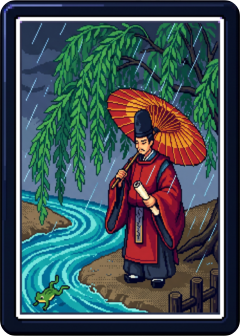
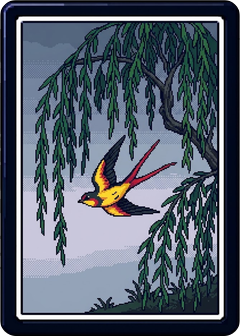
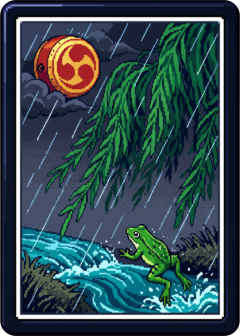
🌸 柳(Weeping Willow (Rain))
× 柳に小野道風 (20点 光)・柳に燕 (10点 種)・柳に蛙
Lunar origin:From 霜降月 (“Month of Falling Frost”), when white morning frost (霜) first sparkles on roofs and fields.
Showcases the 20-point Rain Bright (柳に小野道風), the 10-point Willow & Swallow Tane (柳に燕), and the Lightning/Frog card (柳に蛙), honoring Michikaze learning perseverance from a leaping rain frog.
12十二月· 師走
Shiwasu
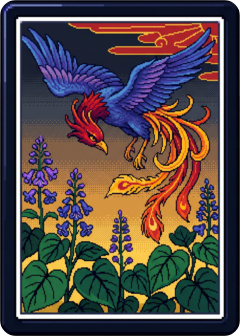
🌸 桐(Paulownia)
× 鳳凰
Lunar origin:Literally “Teachers / Monks Run!” (師が走る) — even normally serene Buddhist priests and teachers dash around busily before New Year’s Eve.
The paulownia crest (桐紋) is an emblem of the Japanese Prime Minister and Imperial Court. Legend says the Ho-oh phoenix (鳳凰) alights only on paulownia trees.
1. The 4 Card Ranks (花札の四つの格) — Point Values & Visual Anatomy
Total in 48-Card Deck: 5 Brights (光) + 9 Animals (種) + 10 Ribbons (短冊) + 24 Plains (粕)
光 (五光札)20点 (20pt)
The 5 crown jewels of the deck depicting luminous celestial or imperial motifs: Crane & Sun (松に鶴), Cherry Curtain (桜に幕), Full Moon (芒に月), Calligrapher in Rain (柳に小野道風), and Phoenix (桐に鳳凰).
Collect 3, 4, or all 5 Brights to score 三光 (5文), 雨四光 (7文), 四光 (8文), or 五光 (10文).
Combine Boar + Deer + Butterfly for 猪鹿蝶 (5文), pair the Sake Cup with Sakura or Moon (5文), or collect any 5 種 cards for タネ (1文+).
短冊 (タン札)5点 (5pt)
Ten months (all except August & December) include a paper poetry slip (短冊) tied to the branches: 3 Red Poetry Ribbons (赤短 with 「あかよろし」/「みよしの」), 3 Blue/Purple Ribbons (青短), and 4 Plain Red Ribbons.
Collect all 3 Red Poetry Ribbons for 赤短 (5文), all 3 Blue Ribbons for 青短 (5文), or any 5 ribbons for タン (1文+).
粕 (カス札)1点 (1pt)
Half of a traditional 48-card Hanafuda deck consists of plain botanical cards (粕, literally “sake lees / chaff”) depicting only the month’s flower or foliage without animals or ribbons.
Essential for capturing high-value cards of the same month from the field! Collecting 10 粕 cards scores カス (1文, +1文 per extra card).
All 4 “dry” 光 cards (松・桜・芒・桐), excluding the Rain Man (柳に小野道風).
雨四光Ame-Shikō · Rainy Four Brights
7文
Any 4 光 cards that include the November Rain Man (柳に小野道風).
三光Sankō · Three Brights (Dry)
5文
Any 3 of the 4 dry 光 cards (松・桜・芒・桐) — Rain Man does NOT count for 三光!
猪鹿蝶Ino-Shika-Chō · Boar, Deer & Butterfly
5文 (+1文/extra 種)
July Boar (萩に猪) + October Deer (紅葉に鹿) + June Butterflies (牡丹に蝶).
花見で一杯Hanami de Ippai · Cherry Blossom Viewing Sake
5文
March Cherry Curtain (桜に幕) + September Sake Cup (菊に盃).
月見で一杯Tsukimi de Ippai · Moon Viewing Sake
5文
August Full Moon (芒に月) + September Sake Cup (菊に盃).
赤短Akatan · Red Poetry Ribbons
5文 (+1文/extra 短冊)
All 3 inscribed Red Poetry Ribbons: January Pine (松) + February Plum (梅) + March Cherry (桜).
青短Aotan · Blue / Purple Ribbons
5文 (+1文/extra 短冊)
All 3 Blue/Purple Ribbons: June Peony (牡丹) + September Chrysanthemum (菊) + October Maple (紅葉).
タネ (種5枚)Tane · Five Animals / Objects
1文 (+1文/extra)
Any 5 種 (10pt Animal/Object) cards (+1文 for each additional 種 card beyond 5).
3. Everyday Japanese Idioms Born from Hanafuda (花札から生まれた日本語表現)
Common vocabulary with roots in traditional flower cards
ぴか一 (ピカイチ)Pika-ichi
In Hanafuda games, 光 (20pt Bright) cards were nicknamed ピカ (“sparkling/shining”). Having a single Bright card among plain 1-point cards (一) was called ピカ一.
彼女の日本語の発音はクラスでぴか一だ。(Her Japanese pronunciation is the absolute best in the class.)
しかと (シカトする)Shikato (suru)
On the 10th-month (十) 10-point card, 紅葉に鹿 (“Deer-Ten” = 鹿十 → しかと), the stag turns its face sharply away to the side as if snubbing the viewer!
挨拶したのに、彼にしかとされた。(Even though I greeted him, he completely ignored me.)
あかよろし (明かよろし)Aka-yoroshi
Written on the January & February Red Poetry Ribbons as 「あ𛀙よろし」. Because the archaic hentaigana character 𛀙 (ka, from 可) looks like の (no), generations misread it as 「あのよろし」!
松と梅の赤短には「あかよろし」と書かれている。(“Akayoroshi” (Clearly wonderful!) is written on the Pine and Plum red ribbons.)
こいこい (来い来い) vs. 勝負Koi-Koi vs. Shōbu
When you complete a yaku in Hanafuda, you must choose: call 勝負 to lock in your points immediately, or call 「こいこい!」 (“Come on!”) to keep drawing — risking everything if your opponent scores first!
三光ができたので、五光を狙って「こいこい」と宣言した。(Having completed Three Brights, I declared “Koi-Koi!” to aim for Five Brights.)